Publisher: N/A, or the complexity of understanding “the publisher” (method notes)

This is a note on method arising from work on the OA APC longitudinal trends study that may be of broader interest to those studying scholarly communication and open access as it is important to understand the role of “the publisher”. A story approach seems the best means to explain. One publisher name in DOAJ is N/A. This is not an error; the publisher of the Journal of Peer Production is N/A, that is, there is no “publisher”, just the journal. There are many journals for whom the “publisher” is the title of the journal, the name of the editor, or the university that hosts the journal, even if there is no university press so no formal publishing by the university.

Not-for-profit university and society publishing is very much evident in the open access landscape. As reported at ELPUB (Morrison, 2018), as of 2017 there were over 7,300 active fully open access journals published by universities or societies with no publication fees. This was the majority of the sample. The full sample includes journals with publication fees, journals for which publication fee status is unknown, and ceased journals. While 2019 full analysis will have to wait until data collection and quality analysis is complete, a visual check indicates that university and society publishing continues to be a large part of open access publishing.

Identifying a university “publisher” is more complicated than one might think. Universities may have a university press as well as another publisher such as a library outside of the press. University journals’ publishers may be indicated by names of regional campuses. A single University publisher may have two different names based on language. This is the case for my own University; both the University of Ottawa and Université d’Ottawa are listed as publishers in DOAJ.

Commercial publishers often have variations in names, sometimes simply name variations and at other times reflecting mergers and acquisitions or different brands of a single publisher. For example, SpringerNature’s open journals are listed under SpringerOpen, Nature, and BioMedCentral. DeGruyter publishes open journals under both DeGruyter and Sciendo. To understand the nature of such publishers, it is necessary to have some knowledge of the underlying business.

Many journals are published by societies, universities or governments, in partnership with commercial publishers. The nature of such partnerships (who does what) can vary, including attribution as publisher. The not-for-profit sponsor or the commercial publisher, or both, can  be identified as the publisher.

There is also journal publishing software and platforms whose functions are part of the publishing process, and to a greater or lesser degree. In Canada, érudit is closer to the classic definition of publisher while Open Journal Systems is an open source journal publishing software but also an organization also offers journal hosting and may be used as the publishing platform for another publisher.

Method notes (for 2019 dataset and analysis in progress)

To prepare for fall 2020 data collection from “publisher” websites, I created an excel pivot table of publishers from the OA Main spreadsheet.The purpose of this exercise is to determine publishers by size to make decisions on sampling.

This spreadsheet starts with and includes DOAJ metadata, but goes beyond. The purpose of the pivot table was to watch for duplication of publisher names. This can easily happen due to variation in publisher names, sometimes reflecting acquisitions (e.g. Medknow, Wolters Kluwer Medknow) and sometimes reflecting slight variations in the name such as presence or absence of accents, typos, inclusion or exclusion of an acronym. The original pivot table included over 8,500 publisher names. The method involves manual checking, a tedious process and sometimes uncertain as it is not always clear whether a variation actually reflects a different publisher. 407 duplications of publisher names were found and eliminated in this process. Errors in the remaining data are quite possible, with failure to identify duplicates (e.g. for reasons of language or lack of understanding of the nature of a university system in a foreign country) being most likely, and minor risk of incorrect duplication of separate publishers. It would be difficult to calculate an accurate count of the number of open access journal publishers from this data for the reasons explained above. The number is clearly in the thousands, but how many thousands would depend on how a publisher is defined and accurate identification of such “publishers”.

In this context, publisher: N/A is both a unique anecdote and an idea worthy of consideration. The idea that every journal has, or has to have, a “publisher” may be a myth.

Reference

Heather Morrison. Global OA APCs (APC) 2010–2017: Major Trends. ELPUB 2018, Jun 2018, Toronto, Canada. ⟨10.4000/proceedings.elpub.2018.16⟩. ⟨hal-01816699⟩

To cite this post:

Morrison, H. (2019). Publisher: N/A, or the complexity of understanding “the publisher” (method notes). Sustaining the Knowledge Commons August 22, 2019. https://sustainingknowledgecommons.org/2019/08/22/publisher-n-a-or-the-complexity-of-understanding-the-publisher-method-notes/

DOAJ: handmaiden to despots? or, OA, we need to talk

As any movement grows and flourishes, decisions made will turn out to have unforeseen consequences. Achieving the goals of the movement requires critical reflection and occasional changes in policy and procedure.The purpose of this post is to point out that the Directory of Open Access Journals (DOAJ) appears to be inadvertently acting as a handmaiden to at least one despotic government, facilitating dissemination of works subject to censorship and rejecting open access journals that would be suitable venues for critics of the despotic government. There is no blame and no immediately obvious remedy, but solving a problem begins with acknowledging that a problem exists and inviting discussion of how to avoid and solve the problem. OA friends, please consider this such an invitation.

As I posted recently, SpringerOpen is currently publishing 13 journals that are sponsored by the Government of Egypt, a government that has been criticized for numerous major violations of the human rights and academic freedoms of scholars (by “major” I mean consequences up to and including murder). These journals are listed in DOAJ.

In contrast, a number of journals that welcome global authors that would be suitable venues for critics of the Egyptian government (a number of the Global Communication Journals network journals and the International Journal of Communication) are no longer listed in DOAJ, in spite of the facts that these journals are fully open access and meet the quality criteria for DOAJ, as discussed here.

It seems very unlikely that anyone in the OA movement deliberately decided on a strategy of facilitating the inclusion of works sponsored by a despotic government and suppressing venues suitable for critique of despotic governments. But in effect this is what is happening. I do not know if this scenario is unique. There are reasons to think that it is not. As reported in previous posts on this blog, large commercial companies partnering with various sponsors is not unusual. A large company with dedicated staff and a number of open access journals is in a better position to ensure that their journals are included in DOAJ than a small one-off not-for-profit journal.

There is no blame and no instant remedy, but to achieve the vision of the global sharing of the knowledge of humankind, solutions must be found. The first steps in solving a problem are acknowledging that a problem exists and inviting discussion and brainstorm on potential solutions. OA friends, please consider this an invitation.

Links to posts referred to:

https://sustainingknowledgecommons.org/2019/08/07/springeropen-egypt-and-academic-freedom/

https://sustainingknowledgecommons.org/2019/08/13/no-fee-inclusive-journals-and-disappointment-with-doaj/

Cite as:

Morrison, H. (2019). DOAJ: Handmaiden to despots? or, OA, we need to talk. Sustaining the Knowledge Commons / Soutenir Les Savoirs Communs. Retrieved from https://sustainingknowledgecommons.org/2019/08/14/doaj-handmaiden-to-despots-or-oa-we-need-to-talk/

SpringerOpen pricing trends 2018 – 2019

by Heather Morrison

Abstract

270 SpringerOpen journals were studied. 33 (12%) have ceased publication, 15 have been transferred to another publisher, and 7 are now hybrid. Of the 215 active journals published by SpringerOpen, 54% charge APCs. The average APC was 1,212 EUR, an increase of 8% over the 2018 average, 6 times the EU inflation rate for June 2019 of 1.3%. 58% of the 96 journals for which we have 2018 and 2018 data did not change in price; 5% decreased in price; and 36% increased in price. Price increases for journals that increased in price ranged from 3% to 109% (double the inflation rate to double in price). Journals with the highest volume of publishing were the most likely to have increased in price. This will amplify the effective percentage of articles with price increases for APC payers. 40% of the journals are sponsored by a university, society, government, or other not-for-profit partner, and have no publication fee. The sustainability of these sponsorships is not clear. 12 journals appear to have recently switched from “no APC” to “now APC”, with APCs only slightly below the SpringerOpen average. The affordability of the SpringerOpen partnership approach is called into question. SpringerOpen’s average APC does not compare favorably either to average academic salaries in a low to middle income country (with Egypt as an example) or to OJS Premium journal hosting services (the break-even point is 2 articles per year, i.e. a journal that publishes 3 articles per year saves money with OJS Premium as compared to SpringerOpen). Even a sponsor based in Germany only pays half the APC, raising a question about whether SpringerOpen sponsorships are sustainable anywhere.

Details

PDF Springer Open Pricing Trends 2018_2019

Table 1: 2019 SpringerOpen Journal Publication and APC status summary

2019 SpringerOpen Journal Publication and APC status summary
Status * # Journals Percent
APC 117 43%
No publication fee 85 31%
Ceased publication 33 12%
Transferred to another publisher 15 6%
No cost found 13 5%
Now hybrid 7 3%
Total ** 270 100%

* status data is found in “2019 APC publisher website original currency” column

** total excludes 1 predecessor title and 12 journals previously listed under Springer now listed under BMC

Pricing trends 2018 – 2019

Of the 270 journals total:

  • 13 titles are new in 2019 (included in 2019 overall analysis but not 2018 – 2019 trend analysis)
  • 33 are ceased, 7 now hybrid, 15 transferred to another publisher: these titles are not included in the price trends analysis

Total journals included in price trend analysis:

  • 2019 overall: 215
  • 2018 – 2019 comparison: 202

Of the 215 titles, as illustrated in the chart and table below, an APC amount is confirmed for just over half the journals (54%). 40% are confirmed as having no publication fee, while for 6% of the journals it was not possible to confirm whether or not a publication fee is charged.

Chart 1: % of SpringerOpen active times by APC status (has APC, no publication fee, no cost found)
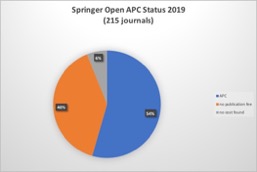
chart1

Table 2: SpringerOpen active titles 2019 by APC status

Springer Open active titles 2019 by APC status
Status Number Percentage
APC 117 54%
No publication fee 85 40%
No cost found * 13 6%
Grand Total 215

* No cost found = we could not identify whether or not there is a publication charge.

Of the 85 titles with no publication fee in 2019, 73 were published in partnership with a university (31), society (17), government (17), or not-for-profit organization (8).  Many of these journals’ websites indicate that there is no publication fee due to sponsorship, for example “…agreement between Springer Nature and the Specialized Presidential Council for Education and Scientific Research (Government of Egypt), therefore author-payable article-processing charges do not apply”. 7 of these titles are new to the Springer Open website in 2019. This suggests that either Springer Nature is actively soliciting sponsoring partners, or that not-for-profit publishers are actively seeking commercial partnerships.

APC Model, currency and some notes re data collection

SpringerOpen uses a straightforward per-article article processing charge. A SpringerOpen APC list that includes pricing for Springer, BioMedCentral, and Nature journals was downloaded from the Springer website on July 16, 2019. Pricing is listed in 3 currencies for each journal: EUR, GBP, and USD. EUR was selected for analysis as this was the currency included in the 2018 OA Main spreadsheet, hence the best for comparison (because Springer is based in Germany, it was assumed that this was the “primary” currency).

For some journals the SpringerOpen APC list states “see website” for pricing. Pricing information for these journals was taken from the SpringerOpen website.

Information about waivers etc., and pricing information for hybrid journals, was not gathered as outside the scope for this project.

APC information from the Jan. 31, 2019 DOAJ metadata forms part of the main spreadsheet. Originally, I had hoped to be able to rely on this data, at least for journals added to DOAJ in 2018 and 2019, at least for journals that do not charge APCs. However, after a quick check I realized that there are a number of journals that indicated no publication charge in DOAJ that currently have a publication charge in the SpringerOpen APC list or website. For this reason, DOAJ data is not used as a basis for 2019 information.

Table 3: 2019 and 2018 SpringerOpen APC central tendency in EUR

2019 and 2018 APC central tendency in EUR
2019 2018 % increase
Average 1,212 1,128 8
Median 1,155 1,035 12

The table above provides the central tendencies for all SpringerOpen titles with an APC for either 2019 (117 journals) or 2018 (104 journals) in EUR. There has been an 8% increase in the average APC and a 12% increase in the median APC.

Price changes 2018 – 2019

There are 96 journals for which we have an APC amount in both 2018 and 2019.

Table 4: SpringerOpen price changes 2018 – 2019 (96 journals)

Direction of change *
Price decrease 5%
No change 58%
Price increase 36%
* Note: does not include change to / from no publication fee

As illustrated in the Table 4 above, a majority of these journals (58%) did not change prices in EUR from 2018 to 2019, while more than a third (36%) increased in price and a few (5%) decreased in price.

The 2018 prices of journals with price increases ranged from 630 EUR (well below average) to 1,750 EUR (well above average). The 2018 average price of these journals was 1,160 EUR, above the 2018 average of 1,128 EUR. The median was 1,100 EUR, above the 2018 median of 1,035 EUR. In other words, while some journals with below-average APCs increased in price, a majority of journals with price increases had above-average APCs in 2018.

For the 35 journals that increased in price, the increases in percentages ranged from 3% to 109% (slightly more than double in price).  According to the European Commission (2019), “Euro area annual inflation was 1.3 % in June 2019, up from 1.2 % in May 2019.” All prices increased were more than double the inflation rate. 23 journals had price increases of 14% or more, more than 10 times the current inflation rate.

All of the 5 journals with APC price decreases had above-average APCs in 2018 (from 1,050 to 2,035 EUR).

Volume of publishing and direction of APC price change

Volume of publishing per journal was calculated using Walt Crawford’s (2018) Global Open Access Journals. The number of articles published per year was summed to get a total # of articles published per journal from 2011 – 2018. A few journals for which no such data was available were excluded. Not surprisingly, volume of publication appears to correlate with APC pricing trend. As illustrated in the table below, journals that decreased in price had on average fewer articles than journals that did change in price, with the highest volume of publication noted for journals with price increases.

Table 5: average SpringerOpen articles published 2011 – 2018 by APC trend

Average # articles published* 2011 – 2018 by APC trend
Price decrease No change Price increase
Average # articles 118 162 674
Median # articles 41 115 243
* from Walt Crawford’s Gold Open Access Journals (2018)

Table 6: 2018 -2019 price changes and # of articles by journal title

Journal title 2019 APC (EUR) 2018 APC (EUR) 2019 – 2018 # 2019 – 2018 % WC # articles total 2011 – 2018
Environmental Sciences Europe 2,040 975 1,065 109% 216
Environmental Systems Research 1,690 885 805 91% 150
Injury Epidemiology 1,465 930 535 58% 176
Agricultural and Food Economics 1,000 650 350 54% 136
Chemical and Biological Technologies in Agriculture 1,570 1,085 485 45% 135
EJNMMI Research 2,170 1,600 570 36% 609
Intensive Care Medicine Experimental 1,870 1,425 445 31% 1,351
Progress in Earth and Planetary Science 1,300 1,000 300 30% 244
Heritage Science 1,180 930 250 27% 276
Boundary Value Problems 1,180 930 250 27% 1,532
Advances in Difference Equations 1,180 930 250 27% 2,523
Journal of Inequalities and Applications 1,180 930 250 27% 2,786
International Journal of Corporate Social Responsibility 1,000 800 200 25% 37
Annals of Intensive Care 2,170 1,750 420 24% 581
Nanoscale Research Letters 1,570 1,300 270 21% 4,038
EURASIP Journal on Information Security 760 630 130 21% 91
Applied Adhesion Science 1,180 1,000 180 18% 119
Journal of Big Data 1,180 1,000 180 18% 161
EPJ Quantum Technology 1,290 1,100 190 17% 54
EURASIP Journal on Audio, Speech, and Music Processing 1,290 1,100 190 17% 200
The Journal of Mathematical Neuroscience 1,290 1,105 185 17% 104
Pastoralism 1,290 1,105 185 17% 190
Rice 1,990 1,745 245 14% 335
Journal of Cloud Computing: Advances, Systems and Applications 860 800 60 8% 419
EURASIP Journal on Image and Video Processing 1,290 1,200 90 8% 475
EURASIP Journal on Advances in Signal Processing 1,290 1,200 90 8% 1,035
EURASIP Journal on Wireless Communications and Networking 1,290 1,200 90 8% 1,962
Critical Ultrasound Journal 1,870 1,745 125 7% 241
Crime Science 990 930 60 6% 107
Fixed Point Theory and Applications 990 930 60 6% 1,181
European Transport Research Review 1,200 1,150 50 4% 270
International Journal of Bipolar Disorders 1,790 1,745 45 3% 162
Sports Medicine – Open 1,790 1,745 45 3% 171
AMB Express 1,790 1,745 45 3% 851
Botanical Studies 1,690 1,745 -55 -3% 355
European Journal of Hybrid Imaging 1,570 1,745 -175 -10% 42
Mechanics of Advanced Materials and Modern Processes 690 1,050 -360 -34% 40
CVIR Endovascular 1,060 1,745 -685 -39% 35

Table 6 above lists all Springer journals with APC changes from 2018 – 2019 in descending order by % change, with the total number of articles published from 2011 – 2018 from Crawford (2018)

“No APC” to “Now APC” journals (12 journals

As of July 26, 2019, there are 12 journals listed in DOAJ where DOAJ indicates “No” Article Processing Charges (APCs) that have APCs according to the Springer Open website. For example, DOAJ information on Brain Informatics is as follows

“PUBLICATION CHARGES

Article Processing Charges (APCs): No.

Submission Charges: No.

Waiver policy for charges? No.”

(Screen scrape from DOAJ website July 26, 2019)

An investigation was conducted to answer the following questions:

  • Are these errors in DOAJ or an actual change from non-charging to charging?
  • What are the characteristics of these journals (age, country of publication, journal license, current APC, society / institution partnerships, timing of switch from non-charging to charging)

Information to answer these questions was drawn from DOAJ and the APC project (data gathered from the publishers’s website) for 2014 – 2019.

Of the 12 journals, 9 are confirmed as having had no publication fee as of 2016, the first year we began systematic gathering of data from the SpringerOpen website. 1 journal listed as “no cost found” in 2016 is listed as “no publication fee” in 2015 and “0” in 2014 (reflecting a change in data collection practices). The remaining 2 journals were identified as “no publication fee” in 2018. Therefore, it was confirmed that all 12 journals were at some point between 2015 and today “No publication fee” journals, that is, journals that had wording on the website clearly indicating that there is no publication charge.

10 of the 12 journals (83%) have a society or institution listed in DOAJ as of Jan. 31, 2019. This suggests two possible reasons for the change from non-charging to charging: 1) the society or institution may have provided interim sponsorship to cover Springer APCs but did not obtain ongoing funding or 2) Springer may have offered an initial low or no-cost deal then raised prices (a common business strategy). The two reasons are not mutually exclusive, and it is possible that other factors are involved that I am not aware of.

Country of publication of no to now APC journals

As illustrated in the table below, 11/12 (92%) of the journals are published in the EU/UK, suggesting a regional trend. 8/12 (two thirds) of the journals are published in Germany, the home country of the ownership and management of parent company SpringerNature (see Who owns SpringerNature? Section below). Does this hint at a direction the company expects to take with all sponsored journals in future?

Table 7: Country of Publication of SpringerOpen “no” to “now” APC journals

Country Journals
Germany 8
Netherlands 1
Singapore 1
United Kingdom 2
Grand Total 12

First calendar year journal provided online Open Access content (no to now journals)

The DOAJ metadata element “First calendar year journal provided online Open Access content” for Jan. 31, 2019 was used a surrogate for age of the journals, with the following results.

Table 8: First calendar year of open access (from DOAJ)

Year Journals
2008 1
2012 1
2013 2
2014 4
2015 1
2016 1
2018 2

The table above indicates a fairly wide range of dates of first online content, with some clustering in 2014. These results are not sufficient to draw inferences about age of journal and tendency to shift from charging to non-charging.

Timing of switch from non-charging to charging

APCs were first found on the SpringerOpen website for these journals as follows:

2017:   1

2018:   3

2019:   8

This data suggests a recent increase in tendency to switch from non-charging to charging. This makes sense in the context of funder push for transition to OA via APCs (OA2020, PlanS).

The APC amounts for these journals are very similar to the overall pattern for SpringerOpen journals, as is illustrated in the following table:

Table 9: SpringerOpen APC no to yes APC v. all

SpringerOpen APC 2019 (EUR)
No to Yes APC only All
Average 1,089 1,212
Median 1,000 1,155
Mode 1,155 885
Range 800 – 1,745 510 – 2,480

Table 10: SpringerOpen Transferred publications

Journal title Transferred to
Bandung: Journal of the Global South Brill
China Finance and Economic Review A new publisher
IZA Journal of Development and Migration Sciendo (de Gruyter imprint)
IZA Journal of Labor Economics Sciendo (de Gruyter imprint)
IZA Journal of Labor Policy Sciendo (de Gruyter imprint)
Journal of Open Innovation: Technology, Market, and Complexity MDPI
Pacific Journal of Mathematics for Industry World Scientific Publishing
Scientific Phone Apps and Mobile Devices APD SKEG Pte Ltd
Strategies in Trauma and Limb Reconstruction Jaypee
Video Journal of Education and Pedagogy The Association of Visual Pedagogies

Of the 10 journals that were transferred to other publishers, 8 were transferred to other commercial publishers, 1 was transferred to the association partner, and 1 simply indicated “new publisher”. 3 of these journals were picked up by deGruyter imprint Sciendo.

Discussion

One of the goals of the Sustaining the Knowledge Commons project is to assess the sustainability of approaches to open access. This analysis of Springer Open as of summer 2019 raises some concerns. APC price increases far beyond inflationary rates, particularly when correlated with journals with higher volume, raises questions about the sustainability of the APC approach. The following section focuses on questions about the sustainability of the SpringerOpen partner-sponsor approach that currently accounts for 40% of SpringerOpen journals.

Journal and partnership sustainability

SpringerOpen is a relatively new entrant into open access journal publishing. SpringerOpen appears to be growing through a combination of starting new commercial journals and partnerships with societies, universities, and other not-for-profits that appear to start out with sponsorship approach. In this context, a 12% attrition (“ceased publication”) rate is a concern, particularly when ceased journal titles are no longer listed on the SpringerOpen website or DOAJ, as explained in detail in Morrison (July 22, 2019).

The sustainability of sponsoring partnerships needs further examination. 12 journals that formerly had no publication fees, now have fees. A glance at the list of new sponsoring journals raises questions about sustainability. One of the sponsoring agents is the Government of Egypt. This raises concerns about academic freedom as the Government of Egypt has been described as actively directing academic research and major abuses of the human rights of students and faculty, as discussed in detail elsewhere (Morrison, Aug. 7, 2019). This section will focus on the question of the economic sustainability of this approach.

As we noted a few years ago (Salhab and Morrison, 2015), as of 2015 it would have taken 3 months’ salary for a full professor in Egypt’s public university system to pay an APC of $1,500 USD. The current average APC rate is 1,212 EUR for Springer, equivalent to 1,357 USD (as of August 8, 2019 according to XE currency converter).

As of July 2019, SpringerOpen publishes 13 journals supported by “Specialized Presidential Council for Education and Scientific Research (Government of Egypt), so author-payable article-processing charges do not apply.” The titles are listed below. This arrangement appears to be in growth mode as 5 of these titles are new to the SpringerOpen list in 2019. In addition, The Journal of Basic and Applied Zoology, is published by an Egyptian society.

Table 11: Egypt sponsored SpringerOpen journals, July 2019

Ain Shams Journal of Anesthesiology
Bulletin of the National Research Centre
Egyptian Journal of Biological Pest Control
Egyptian Journal of Forensic Sciences
Egyptian Journal of Medical Human Genetics
Egyptian Journal of Neurosurgery
Egyptian Journal of Radiology and Nuclear Medicine
Egyptian Pediatric Association Gazette
Journal of the Egyptian Public Health Association
Middle East Current Psychiatry
The Cardiothoracic Surgeon
The Egyptian Heart Journal
The Egyptian Journal of Neurology, Psychiatry and Neurosurgery

I hope that the salaries of professors in Egypt’s public university system have improved substantially since 2015. However, if this is not the case, this raises questions about the sustainability of this kind of sponsorship. If the Government of Egypt were to pay SpringerOpen average APCs (1,212 EUR or 1,357 USD) for a small journal publishing 40 articles per year, this sponsorship would cost 54,280 USD per year. If the salary rate for a full professor is still about 6,000 USD per year (1,500 for 3 months x 4), then the cost for sponsoring just one journal with SpringerOpen would be equivalent to the salaries of 9 full professors.

Optimistically guessing that the salaries of professors have doubled in the last few years, sponsoring just one small journal of 40 articles per year would cost the equivalent of the salaries of 4.5 full professors. Egyptian authors would be eligible for a 50% SpringerOpen discount because Egypt is listed as a lower-middle income economy by the World Bank (2019) (SpringerOpen, 2019). Assuming that the discount is applied to the sponsoring partner (the Government of Egypt), this still leaves the situation where a 40-article-per-year journal costs the equivalent of 4.5 full professors’ salaries. Assuming these waivers are applied and are not simply absorbed by a SpringerOpen profit rate of 50%, if the sponsor did not pay the full cost, who does?

Are these sponsorships affordable in the long run even for wealthy countries? The following statement of partial coverage of the 1,155 EUR APC of one of SpringerOpen’s journals may be relevant here as it suggests that SpringerOpen’s business plan involves charging sponsors similar amounts to their average APCs, and raises a question about whether a relatively well-funded research organization based in the same country as SpringerNature can afford to maintain this sponsorship model on an ongoing basis: “50% of the Article Processing Charge for Geothermal Energy is covered by Helmholtz Centre for Environmental Research – UFZ, Helmholtz Centre Potsdam – GFZ German Research Centre for Geosciences, and Karlsruhe Institute of Technology” (from SpringerOpen website, July 2019).

There are other options for a country like Egypt that are more sustainable and a better fit with the original goal of the Budapest Open Access Initiative (2002) to “lay the foundation for uniting humanity in a common intellectual conversation and quest for knowledge”. As an initial step, I recommend developing a national open access repository or a system of institutional repositories, including an approach such as LOCKSS for preservation purposes, and developing a policy requiring Egyptian researchers to deposit their work for open access in these repositories. This is important to ensure that Egypt (and any other country) does not risk losing access to its own funded research. Relying for access on servers and suppliers in other countries is not wise in the long run because wars (military and trade) and natural disasters could result in temporary or permanent loss of access.

For publishing, there are significant advantages to a local approach, such as hosting local journals using the open source Open Journal Systems (OJS) and hiring local academics, technicians, and administrative assistants to do the work of publishing. OJS is just one example that I use, partly due to familiarity and partly due to open posting of their pricing. In the short term, this provides the immediate benefit of the lower and more predictable costs of local wages. In the long term, this approach cultivates the development of local expertise (technical and academic) and prepares Egyptian researchers for a larger role in international research. As an interim step, the Government of Egypt could contract with OJS for hosted systems at a cost of 850 USD – 2,700 USD per journal, depending on the level of service preferred. Assuming a 40-article per year journal and premium OJS service at 2,700 USD, this would save 51,580 USD per year as compared to publishing with SpringerOpen. Assuming SpringerOpen only expects half due to Egypt’s income status (27,140 USD), this still saves 24,440 USD per year.

Multiplying by 13 journals would result in an estimated cost savings of 317,720 USD – 670,540 USD per year. Assuming 2015 salary figures are still fairly accurate, this sum would be enough to pay the salaries of 55 – 110 full professors.

If half of this amount is redirected to hiring local staff (e.g., pay part of the time of a full-time professor to oversee academic quality, a librarian shared among several journals to look after journal hosting, a part-time administrative assistant), the Government of Egypt benefits from both cost savings and building of local expertise and leadership, and is developing the expertise to benefit even further down the road as this approach is good preparation for eventual further savings from downloading and hosting the software, eliminating the hosting fees. Aside from cost savings, this approach helps us to move towards equity – equal participation – and away from the charity model of APCs with waivers.

A simpler way to express the difference in affordability of the 2 approaches: 2 APCs at 1,357 USD (SpringerOpen average) = 2,714 USD. OJS premium journal hosting is 2,700 USD. The break-even point for a journal using OJS hosting as compared to partnering with SpringerOpen is 2 articles / year. Any journal that publishes 3 or more articles per year saves money with OJS’ premium service.

Perhaps this model would be helpful to institutions like Helmholtz in Germany, too? This basic approach (support local publishing) is a popular model in North and Latin America.

Who owns SpringerNature? According to the SpringerNature website:

“Springer Nature is organised as a German partnership limited by shares…which combines elements of a German stock corporation…and elements of a German limited partnership…  Shares in Springer Nature are held by entities controlled by the Holtzbrinck Publishing Group and funds advised by BC Partners.

The management …is undertaken by a “general partner” (or “GP”)… For Springer Nature the GP is a German stock corporation held by entities controlled by the Holtzbrinck Publishing Group and funds advised by BC Partners….” Screen scraped from July 26, 2019 (German omitted).

Raw data  in excel: (Springer portion of main spreadsheet). Caution: this is a working document without documentation and does not include analysis.

Springer_OA_main_2019

References

Budapest Open Access Initiative (2002). Read the initiative. Retrieved August 8, 2019 from https://www.budapestopenaccessinitiative.org/read

Crawford, W. (2018). Gold Open Access Journals 2013 – 2018. Retrieved July 29, 2019 from https://waltcrawford.name/goa4.pdf

European Commission (2019). Eurostat statistics explained. Retrieved July 29, 2019 from https://ec.europa.eu/eurostat/statistics-explained/index.php/Inflation_in_the_euro_area#Euro_area_annual_inflation_rate_and_its_main_components

Morrison, H. July 22, 2019. SpringerOpen ceased, now hybrid, and OA identification challenges. Sustaining the Knowledge Commons. https://sustainingknowledgecommons.org/2019/07/22/springer-open-ceased-now-hybrid-oa-identification-challenges/

Morrison, H. August 7, 2019. SpringerOpen, Egypt, and academic freedom. Sustaining the Knowledge Commons. https://sustainingknowledgecommons.org/2019/08/07/springeropen-egypt-and-academic-freedom/

Salhab, J. & Morrison, H. (2015). Who is served by for-profit gold open access publishing? A case study of Hindawi and Egypt. Sustaining the Knowledge Commons https://sustainingknowledgecommons.org/2015/04/10/who-is-served-by-for-profit-gold-open-access-publishing-a-case-study-of-hindawi-and-egypt/

SpringerOpen (2019). APC waivers and discounts. Retrieved August 8, 2019 from https://www.springeropen.com/get-published/article-processing-charges/open-access-waiver-fund

World Bank (2019). World Bank country and lending groups. Retrieved August 8, 2019 from https://datahelpdesk.worldbank.org/knowledgebase/articles/906519

Cite as: Morrison, H. (2019). SpringerOpen pricing trends 2019. Sustaining the Knowledge Commons August 13, 2019 https://sustainingknowledgecommons.org/2019/08/13/springeropen-pricing-trends-2018-2019/

SpringerOpen, Egypt, and academic freedom

SpringerOpen 2019 and the Government of Egypt

by Dr. Heather Morrison

SpringerOpen is currently publishing 13 journals sponsored by the Government of Egypt. This is an opportunity to discuss some issues of relevance to the goals and sustainability of open access, starting with academic freedom. As described by Holmes and Aziz (2019) there are very serious problems with academic freedom in Egypt, ranging from tight government control over what is studied and published to extrajudicial killings of 21 students in the last few years. The University of Liverpool considered, then rejected, a lucrative offer to set up a campus in Egypt due to concerns about reputational damage. This raises some interesting questions. Academic freedom is critical to any kind of meaningful open access. Nothing could possibly be more in opposition to open access than a dead student whose research was destroyed because of what was studied. Why is SpringerOpen partnering with the Government of Egypt? Should academics boycott SpringerOpen because of this partnership? What, if anything, can academics do to support academic freedom in a country like Egypt? Some believe that the Creative Commons license CC-BY (attribution only) is the best for open access (I don’t agree, but this is a separate topic). If your research could get you killed, attribution might not be a good idea. Today, some of us might assume that these kinds of problems would never happen in our own countries; but times change, and it has happened that places that enjoyed freedom at one point in time came under the control of a dictator.

Following is the list of titles which state on the SpringerOpen site that they are supported by the “Specialized Presidential Council for Education and Scientific Research (Government of Egypt), so author-payable article-processing charges do not apply”.

Journals supported by the Government of Egypt published by SpringerOpen as of July 2019
Ain Shams Journal of Anesthesiology
Bulletin of the National Research Centre
Egyptian Journal of Biological Pest Control
Egyptian Journal of Forensic Sciences
Egyptian Journal of Medical Human Genetics
Egyptian Journal of Neurosurgery
Egyptian Journal of Radiology and Nuclear Medicine
Egyptian Pediatric Association Gazette
Journal of the Egyptian Public Health Association
Middle East Current Psychiatry
The Cardiothoracic Surgeon
The Egyptian Heart Journal
The Egyptian Journal of Neurology, Psychiatry and Neurosurgery

Holmes, A. & Aziz, A. (2019). Egypt’s lost academic freedom. Carnegie Endowment for International Peace. Retrieved August 9, 2019 from https://carnegieendowment.org/sada/78210

Cite as: Morrison, H. (2019). SpringerOpen, Egypt, and academic freedom. Sustaining the Knowledge Commons / Soutenir Les Savoirs Communs. Retrieved from https://sustainingknowledgecommons.org/2019/08/07/springeropen-egypt-and-academic-freedom/


SpringerNature and Macmillan: one company, two directions: open access and IP maximization

Second update July 30 (thanks to Springer’s Katie Baker): this Holtzbrinck.com site helps with how it all sits. SpringerNature is first on the page of companies owned, Macmillan Publishing is second.

Update July 30:

To help readers “see” the overall SpringerNature business, I’ve included the following screen shots which lists of Springer Nature brands captured from the SpringerNature group website on July 30, 2019 and the Macmillan.com site which that states that “Macmillan Publishers is a division of the Holtzbrinck Publishing Group, a large family-owned media company headquartered in Stuttgart, Germany”. According to the SpringerNature group history, “Springer Nature was formed through the merger of Nature Publishing Group, Palgrave Macmillan, Macmillan Education and Springer Science+Business Media. The main shareholders of Springer Nature are Holtzbrinck Publishing Group and BC Partners. Holtzbrinck, a family-owned company based in Stuttgart, holds a majority share of 53 per cent” (from https://group.springernature.com/gp/group/aboutus/our-history). According to Springer representative Katie Baker (see comment), Macmillan Publishing is not associated with SpringerNature group. This is no doubt correct, however both report to the same owners, unless the Macmillan.com website is out of date, in which case an update on the business’ current ownership would be helpful.

SNG_trusted_brands_20190730

macmillan.com_20190730

When we interact with a large global business, whether as staff, customers, partners, or others, it is quite common that we only interact with a small portion of the company and have little or no knowledge of the company as a whole. Why does this matter?  Two examples:

  • When a country is having consultations on topics such as open access and copyright, a complex company like SpringerNature may be lobbying for opposing positions. SpringerOpen staff may only be aware of the open access position.
  • The nature of the mix of sub-companies owned by SpringerNature is such that SpringerOpen open access policies such as open licensing might be feeding commercial profit interests at another sub-company such as macmillan education without the knowledge of SpringerOpen staff, authors, and their acquaintances. For example, I would be surprised if SpringerNature sent staff from macmillan education to talk about downstream benefits of commercial re-use in textbook sales and rentals at OASPA or other open access / open education conferences. If open access advocates refer exclusively to downstream open educational uses of openly licensed material, it is not in the best financial interests of the parent company to discuss the potential for downstream toll access re-use.

Original post:

SpringerNature, owner of Springer Open, Nature, and BioMedCentral, positions itself as a leader in the open access movement. However, Springer, Nature, and BMC are only 3 of the brands of the parent company, SpringerNature Group. The purpose of this post is to raise awareness about the dual approach of the parent company with respect to copyright and intellectual property – positioning itself as both a leader in open access and a leader in IP maximization, and to encourage those with a sincere interest in the goal of open access to learn about, and question, organizations with an interest in serving this area.

While the SpringerNature site today states that it is:

“A new force in research publishing
Springer Nature is the world’s largest academic book publisher, publisher of the world’s most influential journals, and a pioneer in the field of open research” (from: https://group.springernature.com/gp/group

…another of the company’s brands, Macmillan, is sending letters to creators complaining that library lending is cannibalizing sales, and is further restricting paid library use of works. See the Canadian Urban Libraries’ Council on this matter here:
http://www.culc.ca/cms_lib/CULC%20Statement%20on%20Macmillan%20US%20Lending.pdf

Following are the brands listed on the SpringerNature group site as of today:

Our brand sites
Springer
Nature Research
BiomedCentral
Palgrave Macmillan
Macmillan Education
Springer Healthcare
Scientific American

In addition to open access, this company is involved in toll access textbook publishing and rentals and educational services that appear to compete with public education services. Even among the 3 brands involved in open access, 2 (Springer and Nature Research) have a long history of making money through subscriptions and sales. Even today, this is probably a much larger source of income than open access, and one of these brands’ main assets is copyright ownership of a large corpus of works.

To understand the potential futures of open access, it is important to understand the nature of the players involved. The friendly staff of Springer Open are no doubt a pleasure to work with for people in the OA movement, and sincere in their embrace of OA. However, when they tell you that true open access requires open licensing granting blanket downstream permission for commercial uses, they might not be aware that some of these commercial uses could involve for-profit textbook sales and rentals.

Unlike Elsevier, SpringerNatureGroup does not post financial information on its website. As a publicly traded corporation, Elsevier is obliged to provide this kind of transparency, including profits and business strategy. The corporation as a form of business can be viewed as an early form of openness in business; anyone can buy shares and participate in profits and decision-making. Springer is privately owned, and has no such obligation. In this respect, Springer is far less open than Elsevier.

Originally posted on the Global Open Access List and the Radical Open Access List.

Cite as: Morrison, H. (2019). SpringerNature and Macmillan: One company, two directions: open access and IP maximization. Sustaining the Knowledge Commons / Soutenir Les Savoirs Communs. Retrieved from https://sustainingknowledgecommons.org/2019/07/29/springernature-and-macmillan-one-company-two-directions-open-access-and-ip-maximization/

Springer Open: ceased, now hybrid, OA identification challenges

Abstract

SpringerNature, owner of Nature Publishing Group, Springer Open, and BioMedCentral, is the world’s largest fully open access journal publisher as measured by number of journals. The purpose of this post is to underscore what appears to be a significant open access attrition rate at SpringerOpen (16% OA attrition in the past few years) and raise questions about challenges to finding and identifying these journals as open access. Ceased journals that were always open access are listed on the SpringerLink (mostly subscriptions) site, not the SpringerOpen website. Subscriptions articles are clearly marked as such; the OA status of an article is not stated on the journal home page. Information provided by a library about License Terms may not mention or resemble a CC license.

Update July 23: the following analysis missed two ceased journals, Asia Pacific Journal on Computational Engineering and China Journal of Economic Research. Unlike the other titles, China Journal of Economic Research is not listed on SpringerLink, although a journal home page can be found through a Google Search. No content is available online and the journal’s default license while publishing is not clear. Adding this title makes a small difference to the numbers and percentages. These titles are not included in the working dataset but will be included in the main file.

Details

We have been tracking 258 Springer Open titles up to 2018 (excluding journals new in 2019 and journals now listed under BioMedCentral). Of these, 33 (13%) have ceased publication and 7 (3%) are now hybrid journals, combining subscriptions and optional open access (Open Choice) articles. Together, these two categories add up to a combined OA attrition rate of 16%.

Finding the titles and/or identifying the open access status of journals and articles could be challenging. For example, 38 of the 40 journals are listed on the main SpringerLink site; none are listed on the Springer Open site. The SpringerLink site includes thousands of journals (a SpringerLink search for “journal” yields over 3,500 results), almost all of which are subscriptions based.

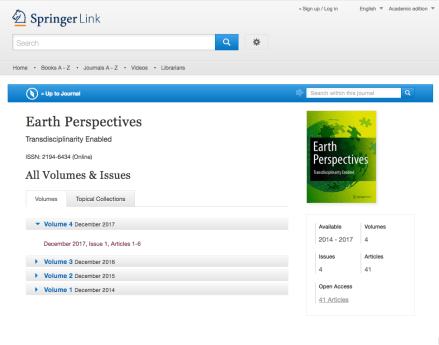
For example, if you click on the link to now ceased Earth Perspectives from the SpringerLink website, while as pictured on the bottom right hand side there is a link to the open access collection there is no prominent mention of the open access status of this journal. Earth_Perspectives_1

Clicking on the latest volume, as shown, brings up a list of articles in the volume, with no indication at this stage that the articles are open access. Earth_Perspectives_2.

Once you get to the actual article, the open access status is stated clearly at the top and the copyright link goes to the CC-BY license (all ceased titles were licensed CC-BY).

18 of the 32 ceased titles were listed in DOAJ in 2018; only 2 are listed in DOAJ as of Jan. 31, 2019.

Journals ceased by year
2015 1
2016 6
2017 10
2018 8
2019 1
not stated 7
Grand Total 33

As illustrated by the table above, most of these journals ceased quite recently. Authors who selected a journal for publication in 2017 or 2018 because it was on the Springer Open website and/or in DOAJ might be surprised to know that their journal has been de-listed by these sites, perhaps shortly after their article was published.

When I look up the titles through the University of Ottawa library’s A to Z journal list, the journals are identified as open or free access, however the link to the License Terms of Use, while they indicate broad use, are very different from CC-BY. For example, the answer to the question: “Can I post a copy in a course management system?” is: “The licensee and authorized users may incorporate parts of the licensed materials in Virtual Campus.” There is no indication of the CC license. As an aside, this is not meant as a critique; identifying an entire journal as under one CC license might solve some problems, but would likely create others.

Some examples of problems arising from identifying CC licensing at a journal level

  • third party content is generally under a different license than an article or journal
  • different articles and different types of content may have different licenses
  • the journal may have changed its default license over time; in the case of journals that began publishing before CC licenses became available, this is almost always the case

6 of the 7 journals that are now hybrid are clearly hybrid, mixing open access and subscriptions content. In the list of articles in a particular volume, subscription articles are clearly marked with a lock, and lead to information that an article can be purchased for $39.95, rented through DeepDyve, or subscribed to. There is no open access note or symbol for open access content, although on the bottom right hand of the screen there is a link to an open access collection search, and items are marked as open access once the reader gets to the article level.

Following are lists of the ceased and hybrid publications, remember if you would like to look them up, use SpringerLink site, not the Springer Open site:

Ceased

Applied Informatics
Asian Journal of Gambling Issues and Public Health
Asia Pacific Journal on Computational Engineering
Brazilian Journal of Science and Technology
China Journal of Economic Research
Computational Cognitive Science
Decision Analytics
Earth Perspectives — Transdisciplinarity Enabled
Earthquake Science
EURASIP Journal on Embedded Systems
Fields Mathematics Education Journal
In Silico Cell and Tissue Science
Infrastructure Complexity
International Journal of Dharma Studies
Journal of Chinese Management
Journal of Chinese Studies
Journal of Computational Surgery
Journal of Frugal Innovation
Journal of Solid State Lighting
Journal of Trust Management
Journal of Uncertainty Analysis and Applications
Lingua Sinica
Mathematics-in-Industry Case Studies
Multilingual Education
mUX: The Journal of Mobile User Experience
Psychology of Well-Being
Robotics and Biomimetics
SpringerPlus
Sustainable Chemical Processes
Technology, Innovation and Education
Textiles and Clothing Sustainability
The Journal of Global Positioning Systems
Zoological Studies

Now hybrid

Fire Science Reviews (technically open access predecessor to hybrid Fire Technology)
In Silico Pharmacology
Integrating Materials and Manufacturing Innovation
Maritime Studies
Research in the Mathematical Sciences
Science China Life Sciences
Journal of Remanufacturing

Full but messy, working, undocumented data is available for download here:

Springer_ceased_2019

Springer_now_hybrid_2019

This is only one aspect of the Springer Open 2019 analysis.

For earlier posts on Springer, see https://sustainingknowledgecommons.org/?s=springer&submit=Search

Cite as:

Morrison, H. (2019). Springer Open: Ceased, now hybrid, OA identification challenges. Sustaining the Knowledge Commons / Soutenir Les Savoirs Communs. Retrieved from https://sustainingknowledgecommons.org/2019/07/22/springer-open-ceased-now-hybrid-oa-identification-challenges/


Frontiers in 2019: 3% increase in average APC

by Hamid Pashaei and Heather Morrison

The data for 2019 shows that while most 2019 journals by Frontiers incurred no changes in article processing charge comparing to 2018, but the increase in APC of 23 journals (40% of Frontier journals) is significant, with APC increases of 18% – 31%.

Frontiers currently publishes 62 journals that shows 10% growth in the number of journals comparing to 56 journals in 2018. Of these, 23 journals (40%) have an increase of $774 in article processing charges but the other journals have no change in comparison to 2018 data. Therefore, the overall increase in Article processing journals for all Frontiers open access journals is 3 percent.

The raw data for Frontiers journals in 2019:

See also:

Frontiers: 40% journals have APC increases of 18 – 31% from 2017 to 2018

Cite as:

Pashaei, H., & Morrison, H. (2019). Frontiers in 2019: 3% increase in average APC. Sustaining the Knowledge Commons / Soutenir Les Savoirs Communs. Retrieved from https://sustainingknowledgecommons.org/2019/04/30/frontiers-in-2019-3-increase-in-average-apc/

BioMed Central in 2019: Sharp increase in article processing charge

by Hamid Pashaei and Heather Morrison

Update May 1, 2019:

Based on an inquiry from Christopher Pym from Springer Nature (owner of BioMedCentral) on the Global Open Access List I (Heather) have re-calculated the observed BMC pricing changes from 2018 – 2019, in GBP rather than USD. BMC reports pricing in 3 currencies (a common practice for large publishers). We use GBP for historical purposes. In brief, this re-analysis confirms our original finding of a sharp increase in APCs. 66% of BMC journals for which we have APC data in GBP for both 2018 and 2019 have increased their APCs; 61% have increased their APCs at far beyond inflationary levels, causing the overall average (including journals that did not change APCs or lowered APCs) to increase by 15%, a rate far beyond inflationary levels. We thank Christopher Pym for his interest in our research.

We have APC data for both 2018 and 2019 for 260 BMC journals. The average APC for these journals was 1,416 GBP in 2018, 1,555 GBP in 2019, an average increase of 139 GBP or an average 9% increase. The pricing changes are more complex, however, as some BMC journals have maintained or lowered their prices. In USD (using XE currency converter May 1, 2019), the average APC for these journals rose from 1,852 USD to 2,034 USD, an increase of 181 USD (note rounding error of $1).

Of the 260 BMC journals for which we have 2018 and 2018 APCs:

  • 172 (66%) increased in price
  • 55 (21%) maintained the same price
  • 33 (13%) decreased in price

Of the journals that increased in price, the range of percentage increase was from under 1% to 55%. 158 journals (61% of all journals) had APC price increases clearly beyond inflationary levels, ranging from 7% – 55%.

Because of this challenge, I have re-downloaded the BMC APC list from https://www.biomedcentral.com/getpublished/article-processing-charges/biomedcentral-prices and checked GBP pricing for several journals, finding no difference from our data gathering date of April 4.

On the basis of this selective re-analysis of 260 BMC journals for which we have price data I conclude that the average APC price increase for BMC journals is 15%, (factoring in journals that did not change APC or lowered APC), a rate far above inflation, and that the majority of BMC journals (61%) increased their APCs. This confirms our original findings of a sharp APC increase for BMC in 2019. Please note that this re-analysis using the same basic dataset but slightly different methods. The re-analysis is limited to journals for which we have data in both 2018 and 2019, and is limited to GBP. When new journals and journals no longer published by BMC are factored in, this changes the averages; there can also be differences in findings based on which currency is selected for analysis.

A list of BMC APCs in GBP in 2018 and 2019 follows, in order by percentage change (highest price increase first).

Journal Title2019 APC  (GBP)2018 APC (GBP)2019-2018 change in GBP (amount)2019 – 2018 change in GBP (percentage)
Tropical Medicine and Health157070586555%
Molecular Cancer24901,4701,02041%
Acta Neuropathologica Communications157095062039%
Particle and Fibre Toxicology21701,37080037%
Molecular Autism 21701,37080037%
Journal of Experimental & Clinical Cancer Research22901,47082036%
Journal of Hematology & Oncology24901,65084034%
BMC Pulmonary Medicine19901,37062031%
Immunity & Ageing19901,37062031%
Journal of Translational Medicine19901,37062031%
World Journal of Emergency Surgery19901,37062031%
Cardiovascular Diabetology21701,54063029%
Journal of Nanobiotechnology18701,37050027%
Pediatric Rheumatology18701,37050027%
Cell Division19901,47052026%
Genome Medicine25701,90067026%
BMC Veterinary Research15701,16540526%
Annals of Clinical Microbiology and Antimicrobials17901,37042023%
Behavioral and Brain Functions17901,37042023%
Cardiovascular Ultrasound17901,37042023%
Cell Communication and Signaling17901,37042023%
Diagnostic Pathology17901,37042023%
Genes & Nutrition17901,37042023%
Molecular Cytogenetics17901,37042023%
Reproductive Health17901,37042023%
Theoretical Biology and Medical Modelling17901,37042023%
Antimicrobial Resistance and Infection Control 17901,37042023%
International Journal of Pediatric Endocrinology 17901,37042023%
Thyroid Research 17901,37042023%
Clinical Epigenetics20401,56547523%
Retrovirology19901,56542521%
Journal of Physiological Anthropology12701,00027021%
Journal of NeuroEngineering and Rehabilitation17901,43036020%
Nutrition & Metabolism17901,43036020%
BMC Complementary and Alternative Medicine16901,37032019%
BMC Geriatrics16901,37032019%
BMC Medical Research Methodology16901,37032019%
BMC Musculoskeletal Disorders16901,37032019%
BMC Neurology16901,37032019%
Child and Adolescent Psychiatry and Mental Health16901,37032019%
Clinical Sarcoma Research16901,37032019%
Conflict and Health16901,37032019%
Fluids and Barriers of the CNS16901,37032019%
Globalization and Health16901,37032019%
Head & Face Medicine16901,37032019%
International Breastfeeding Journal16901,37032019%
International Journal of Health Geographics16901,37032019%
Microbial Cell Factories16901,37032019%
Neural Development16901,37032019%
Patient Safety in Surgery16901,37032019%
Radiation Oncology16901,37032019%
Reproductive Biology and Endocrinology16901,37032019%
Substance Abuse Treatment, Prevention, and Policy16901,37032019%
Virology Journal16901,37032019%
Hereditary Cancer in Clinical Practice 16901,37032019%
Journal of Ovarian Research 16901,37032019%
Breast Cancer Research 22901,86043019%
Genome Biology23801,95043018%
Cancer Cell International17901,47032018%
Journal of Inflammation17901,47032018%
Journal of Cardiothoracic Surgery16901,39030018%
Stem Cell Research & Therapy16901,39030018%
BMC Research Notes99082516517%
Biological Procedures Online18701,56530516%
Biotechnology for Biofuels18701,56530516%
Human Genomics18701,56530516%
Microbiome18701,56530516%
International Journal for Equity in Health16901,42027016%
Alzheimer’s Research & Therapy16501,39026016%
Nutrition Journal17901,51028016%
Journal of Occupational Medicine and Toxicology16901,44524514%
Gut Pathogens17901,54025014%
Orphanet Journal of Rare Diseases17901,54025014%
BMC Cancer15901,37022014%
BMC Health Services Research15901,37022014%
BMC Public Health15901,37022014%
BMC Medicine21701,88029013%
AIDS Research and Therapy16901,47022013%
Biomarker Research16901,47022013%
Archives of Public Health15701,37020013%
Basic and Clinical Andrology15701,37020013%
BMC Anesthesiology15701,37020013%
BMC Biotechnology15701,37020013%
BMC Cardiovascular Disorders15701,37020013%
BMC Evolutionary Biology15701,37020013%
BMC Gastroenterology15701,37020013%
BMC International Health and Human Rights15701,37020013%
BMC Medical Genetics15701,37020013%
BMC Medical Imaging15701,37020013%
BMC Medical Informatics and Decision Making15701,37020013%
BMC Microbiology15701,37020013%
BMC Palliative Care15701,37020013%
BMC Pediatrics15701,37020013%
BMC Pharmacology and Toxicology15701,37020013%
BMC Psychiatry15701,37020013%
BMC Sports Science, Medicine and Rehabilitation15701,37020013%
BMC Surgery15701,37020013%
BMC Systems Biology15701,37020013%
Cardio-Oncology15701,37020013%
Clinical Proteomics15701,37020013%
Cost Effectiveness and Resource Allocation15701,37020013%
Health and Quality of Life Outcomes15701,37020013%
Infectious Diseases of Poverty15701,37020013%
International Journal of Mental Health Systems15701,37020013%
Population Health Metrics15701,37020013%
Thrombosis Journal15701,37020013%
Epigenetics & Chromatin17901,56522513%
Harm Reduction Journal17901,56522513%
Journal of Neuroinflammation17901,56522513%
Biology of Sex Differences  17901,56522513%
Molecular Medicine17901,56522513%
Critical Care19901,75024012%
Experimental Hematology & Oncology16901,49519512%
Molecular Brain15701,39517511%
Implementation Science16901,51018011%
Respiratory Research17901,61517510%
Journal of Biological Engineering15701,4301409%
Journal of Pharmaceutical Policy and Practice15701,4301409%
Journal for ImmunoTherapy of Cancer16901,5401509%
BMC Infectious Diseases14901,3701208%
Trials14901,3701208%
Annals of Occupational and Environmental Medicine13701,2651058%
Asthma Research and Practice14801,3701107%
BioData Mining14801,3701107%
BMC Biochemistry14801,3701107%
BMC Bioinformatics14801,3701107%
BMC Clinical Pathology14801,3701107%
BMC Ear, Nose and Throat Disorders14801,3701107%
BMC Ecology14801,3701107%
BMC Hematology14801,3701107%
BMC Nephrology14801,3701107%
BMC Nursing14801,3701107%
BMC Ophthalmology14801,3701107%
BMC Oral Health14801,3701107%
BMC Physiology14801,3701107%
BMC Pregnancy and Childbirth14801,3701107%
BMC Structural Biology14801,3701107%
BMC Urology14801,3701107%
Cancers of the Head & Neck14801,3701107%
Clinical and Molecular Allergy14801,3701107%
Clinical Diabetes and Endocrinology14801,3701107%
Contraception and Reproductive Medicine14801,3701107%
Disaster and Military Medicine14801,3701107%
Fertility Research and Practice14801,3701107%
Journal of Clinical Movement Disorders14801,3701107%
Lipids in Health and Disease14801,3701107%
Maternal Health, Neonatology and Perinatology14801,3701107%
Movement Ecology14801,3701107%
Proteome Science14801,3701107%
Translational Medicine Communications14801,3701107%
Tropical Diseases, Travel Medicine and Vaccines14801,3701107%
Women’s Midlife Health14801,3701107%
Addiction Science and Clinical Practice 14801,3701107%
Annals of General Psychiatry16901,5651257%
Cancer & Metabolism16901,5651257%
Journal of Ethnobiology and Ethnomedicine16901,5651257%
Journal of Neurodevelopmental Disorders16901,5651257%
Arthritis Research & Therapy18701,7501206%
Veterinary Research 11751,150252%
BMC Biophysics13901,370201%
BMC Genetics13901,370201%
Cerebellum & Ataxias13901,370201%
Fungal Biology and Biotechnology13901,370201%
Multiple Sclerosis and Demyelinating Disorders13901,370201%
pneumonia13901,370201%
Research Integrity and Peer Review13901,370201%
Sleep Science and Practice13901,370201%
Irish Veterinary Journal 13901,370201%
Cellular & Molecular Biology Letters13901,420-30-2%
World Journal of Surgical Oncology15701,650-80-5%
Research Involvement and Engagement14801,565-85-6%
Bioelectronic Medicine14801,565-85-6%
Big Data Analytics12901,370-80-6%
Hereditas12901,370-80-6%
Marine Biodiversity Records12901,370-80-6%
Porcine Health Management12901,370-80-6%
Source Code for Biology and Medicine12901,370-80-6%
Journal of Biomedical Semantics 12901,370-80-6%
Journal of Biological Research-Thessaloniki13901,510-120-9%
Pilot and Feasibility Studies13901,565-175-13%
Systematic Reviews13901,565-175-13%
Environmental Evidence12901,470-180-14%
BMC Dermatology11801,370-190-16%
BMC Emergency Medicine11801,370-190-16%
Journal of Congenital Cardiology11801,370-190-16%
Diagnostic and Prognostic Research 14801,745-265-18%
EvoDevo  16901,995-305-18%
Agriculture & Food Security12901,565-275-21%
Cilia12901,565-275-21%
Diabetology & Metabolic Syndrome  14201,810-390-27%
Sustainable Earth690900-210-30%
Animal Biotelemetry11801,565-385-33%
European Journal of Medical Research 14801,995-515-35%
BMC Medical Ethics9901,370-380-38%
BMC Nutrition9901,370-380-38%
BMC Obesity9901,370-380-38%
Philosophy, Ethics, and Humanities in Medicine9901,370-380-38%
BMC Psychology8601,370-510-59%
Canine Genetics and Epidemiology8601,370-510-59%
Journal of Eating Disorders8601,370-510-59%
BMC Zoology7901,370-580-73%
Acta Veterinaria Scandinavica15101,5100 
Advances in Simulation15651,5650 
Allergy, Asthma & Clinical Immunology13701,3700 
Biological Research14301,4300 
Biology Direct13701,3700 
Biomaterials Research13701,3700 
BioPsychoSocial Medicine13701,3700 
BMC Biology17801,7800 
BMC Developmental Biology13701,3700 
BMC Endocrine Disorders13701,3700 
BMC Family Practice13701,3700 
BMC Genomics13701,3700 
BMC Immunology13701,3700 
BMC Medical Education13701,3700 
BMC Medical Genomics13701,3700 
BMC Molecular Biology13701,3700 
BMC Neuroscience13701,3700 
BMC Plant Biology13701,3700 
BMC Women’s Health13701,3700 
Borderline Personality Disorder and Emotion Dysregulation13701,3700 
Cell & Bioscience13701,3700 
Chinese Medicine13701,3700 
Clinical and Translational Allergy14701,4700 
Emerging Themes in Epidemiology13701,3700 
Environmental Health14201,4200 
European Review of Aging and Physical Activity13701,3700 
Fisheries and Aquatic Sciences13701,3700 
Frontiers in Zoology15101,5100 
Genetics Selection Evolution11751,1750 
Gynecologic Oncology Research and Practice13701,3700 
Health Research Policy and Systems15651,5650 
Human Resources for Health15651,5650 
Infectious Agents and Cancer13701,3700 
International Journal of Behavioral Nutrition and Physical Activity16501,6500 
Journal of Cardiovascular Magnetic Resonance16001,6000 
Journal of Ecology and Environment13701,3700 
Journal of Foot and Ankle Research13701,3700 
Journal of Health, Population and Nutrition13701,3700 
Journal of Medical Case Reports8258250 
Journal of Pharmaceutical Health Care and Sciences14201,4200 
Journal of the International Society of Sports Nutrition13701,3700 
Malaria Journal14301,4300 
Mobile DNA13701,3700 
Molecular Neurodegeneration16501,6500 
Multidisciplinary Respiratory Medicine13701,3700 
Parasites & Vectors13701,3700 
Perioperative Medicine15651,5650 
Plant Methods14301,4300 
Public Health Reviews13701,3700 
Revista Chilena de Historia Natural12401,2400 
Scandinavian Journal of Trauma, Resuscitation and Emergency Medicine14851,4850 
Cancer Imaging 13701,3700 
Journal of Otolaryngology : Head and Neck Surgery13701,3700 
The Italian Journal of Pediatrics13701,3700 
Cancer Communications13701,3700 
BioMedical Engineering OnLine13751,3705 
Journal of Orthopaedic Surgery and Research15701,5655 
Skeletal Muscle 15701,5655 
Algorithms for Molecular Biology13901,37020 

Our recent analysis of BioMed Central publishing company journals reveals a sharp increase both in number of open access journals and also article processing fees.

BMC currently publishes 330 open access journals that comparing to 2018 data shows an increase of 11% in number of journals. While 25 journals have no article processing fee for authors to publish their articles, there has been a 57% increase in average article processing charge comparing to the last year, as the average processing fee was $1402 in 2018 and now it is $2200.

Comparing to the last year, 264 journals have increased and 5 journals have decreased in APC (article processing charge). The average APC increase for journals is $917 and the average decrease is $124.

The raw data for BMC in 2019 is provided below:

Similar posts:

Ceased and transferred publications and archiving: best practices and room for improvement

Recent APC price changes for 4 publishers (BMC, Hindawi, PLOS, PeerJ)

Cite as:

Pashaei, H., & Morrison, H. (2019). BioMed Central in 2019: Sharp increase in article processing charge. Sustaining the Knowledge Commons / Soutenir Les Savoirs Communs. Retrieved from https://sustainingknowledgecommons.org/2019/04/30/biomed-central-in-2019-sharp-increase-in-article-processing-charge/


Acknowledging a downside to APC: opening up scholars and scholarship to exploitation

Brainard (2019) in an April 3, 2019 article in Science, reports that a U.S. judge has ruled that a “deceptive” publisher [OMICS] should pay $50 million in damages. This is a timely opportunity to acknowledge a downside of the APC business model, that is, opening up scholarship to further commercial exploitation, including exploitation by publishers that do not or may not meet reasonable standards for academic quality and ethics in publishing, and to make recommendations to limit this potential for exploitation.

Abstract

The SKC team often focuses on the article processing charges (APC) business model for OA journal publishing, in order to observe and analyze trends. However, this focus is not an endorsement of either OA publishing (as opposed to OA archiving), or the APC business model that is used by a minority of fully OA journals. This post acknowledges a major downside to the APC model. APC “opens up” scholars and scholarly works for further commercial exploitation by traditional and new publishers that offers a wide range of quality in academic terms, ranging from excellent to mediocre and including a few with unethical practices that are not compatible with advancing our collective knowledge.This judge’s ruling provides an opportune moment to acknowledge this flaw in the APC business model, and to discuss potential remedies. I argue that it is essential for scholarly publishing to be scholar-led so that advancing scholarship is the primary priority. One model that I recommend as one to build on and expand is the SSHRC Aid to Scholarly Journals program. This program provides modest funding to scholarly journals that are under the direction of qualified Canadian academics. This funding is awarded through a competitive process that in effect serves as a journal-level academic peer review process. OA initiatives where key decisions are made by the research community (directly or through librarian representatives) are more likely to ensure high quality and ethical services than policies favouring and/or providing support for OA publishing with no clear vetting process of publication venues.

Details

There are downsides to any model for support of scholarly publishing. One important downside to the APC model is that it further “opens” scholars and scholarly works to exploitation for commercial purposes, including exploitation by publishers that do not meet academic standards for a variety of reasons ranging from lack to experience to deliberate deception. I do not personally evaluate or judge the quality of academic publishing. However, as Brainard (2019) reports, a U.S. judge has literally made a judgement in the case of OMICS.

Context

To understand how scholarly publishing has become vulnerable to this kind of exploitation, it is helpful to unravel the conflation of OA and OA publishing, and of OA publishing and the APC business model.

Open access (OA) is about access to the world’s scholarly knowledge. OA is not the same as OA publishing. There are 2 major approaches to OA; one is OA archiving, which is compatible with diverse publishing models. To get a sense of what has already been achieved through OA archiving, I recommend playing around with 2 major services. One is the Bielefeld Academic Search Engine (BASE). BASE cross-searches over 6,000 archives around the world that collectively contain more than 140 million documents, 60% of which are OA. The other is the Internet Archive, which provides access to billions of webpages, videos, audio recordings, and over 20 million texts. If a classic text is out of copyright, it is probably available through the Internet Archive.

The majority of fully OA journals (73% of journals in DOAJ as of today) do not charge article processing charges (APCs). How do they manage? Small journals can often get by with in-kind support such as journal hosting, modest university, funder, and/or scholarly society subsidies, and/or collaborative library-based support (e.g. Knowledge Unlatched, Open Humanities Press).

As of today, OMICs is still active. There is reason to think that there are substantial numbers of APC based OA journals by publishers of unknown and potentially problematic academic quality. As I reported based on the 2018 survey of OA journals at ELPUB 2018, ” 5 of the largest publishers are no longer listed in DOAJ (Canadian Center of Science and Education, Internet Scientific Publications, LLC, Macrothink Institute, SCIENCEDOMAINInternational, and Scientific Research Publishing; Bentham Open is listed in DOAJ in 2017, but not 2018). (Morrison, 2018). There are a variety of reasons why publishers might not be included in DOAJ. Publishers may not have completed the re-application process. This would be understandable as (in my opinion) the questionnaire is onerous and specific questions do not entirely make sense. However, not meeting the DOAJ criteria does raise questions about the quality of the publisher, particularly if DOAJ itself is used as a means of assessing quality. Journals and publishers disappearing from DOAJ raise the question of the advisability of relying on DOAJ inclusion as a criteria for quality. In an author selects a journal in DOAJ today, assuming this assures quality publication, the journal might disappear from DOAJ later, possibly when the author is up for tenure and promotion and reviewers are taking quality of publication venues into account in making recommendations.

Scams and poor quality publishing is not strictly an OA problem. There are scam conferences that are not at all OA, and traditional publishers of journals and monographs have a wide range of quality. However, it is a downside of a particular model for OA, and I recommend that the OA movement acknowledge this and help find remedies. As noted above, my remedy is scholarly leadership of OA initiatives, that is key decisions made by scholars whose primary work is in the university or research sectors, as the best way to make sure that quality of academic work is the top priority.

References

Brainard, J. (2019). U.S. judge rules deceptive publisher should pay $50 million in damages. Science April 3, 2019. Retrieved April 4, 2019 from https://www.sciencemag.org/news/2019/04/us-judge-rules-deceptive-publisher-should-pay-501-million-damages

Morrison, H. (2018). Global OA APCs 2010 – 2017: major trends. Elpub 2018. Retrieved April 4, 2019 from https://elpub.episciences.org/4604/pdf

Cite as: Morrison, H. (2019). Acknowledging a downside to APC: Opening up scholars and scholarship to exploitation. Sustaining the Knowledge Commons / Soutenir Les Savoirs Communs. Retrieved from https://sustainingknowledgecommons.org/2019/04/04/acknowledging-a-downside-to-apc-opening-up-scholars-and-scholarship-to-exploitation/

Sage in 2019: growing in OA journals, still expensive, complex pricing trends

by Hamid Pashaei and Heather Morrison

Review of Sage Open access database in 2019 shows that the number of their open access journals is growing, they are still following article processing charge model and their payment model is still pricey.

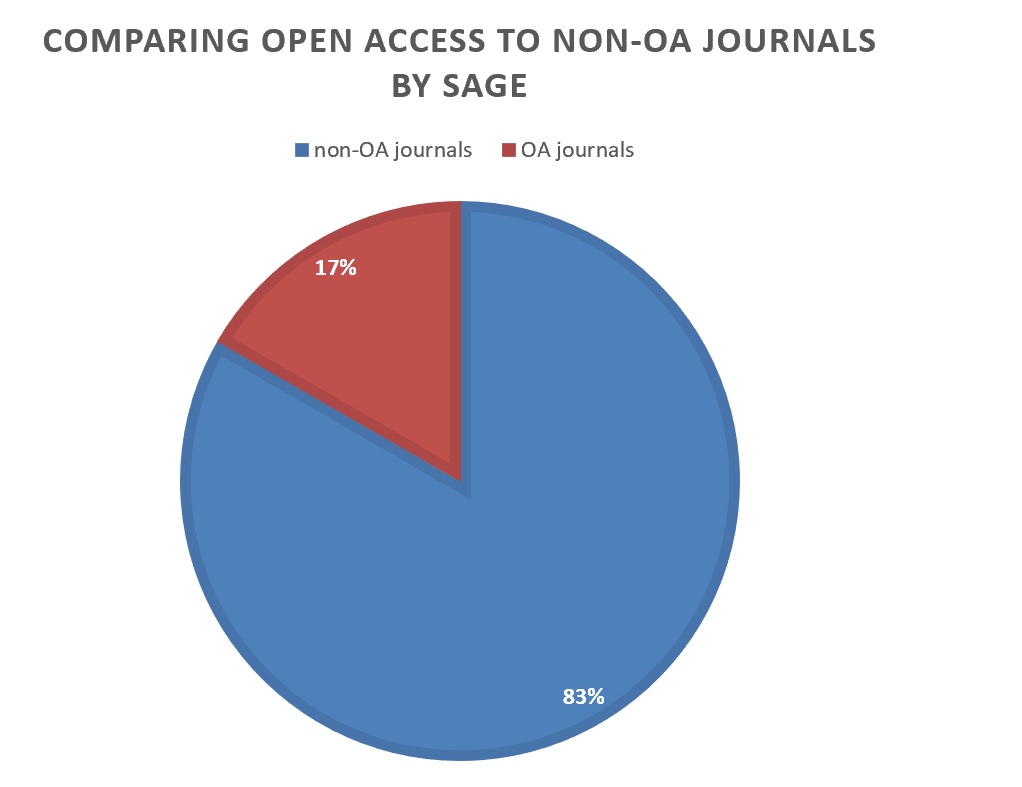
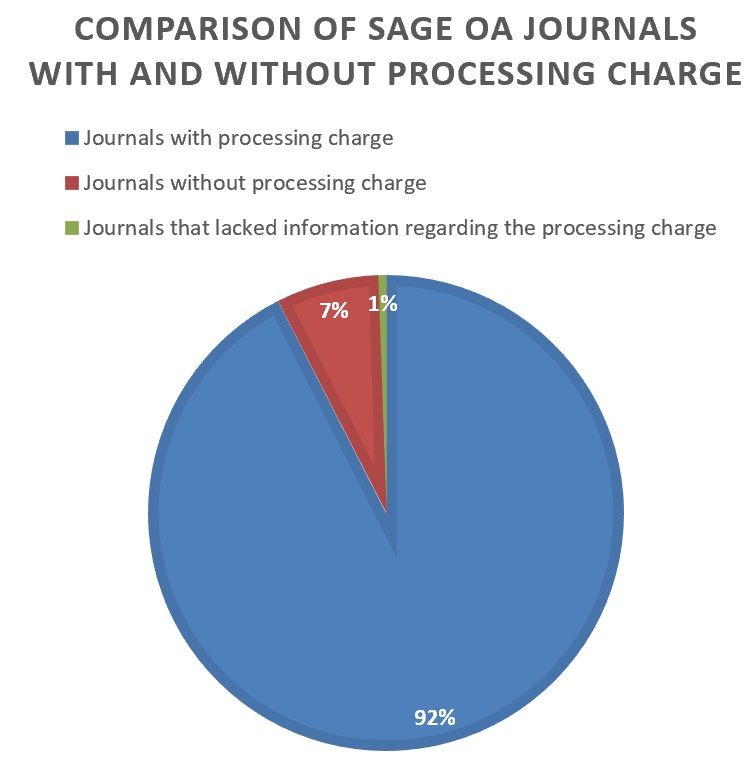
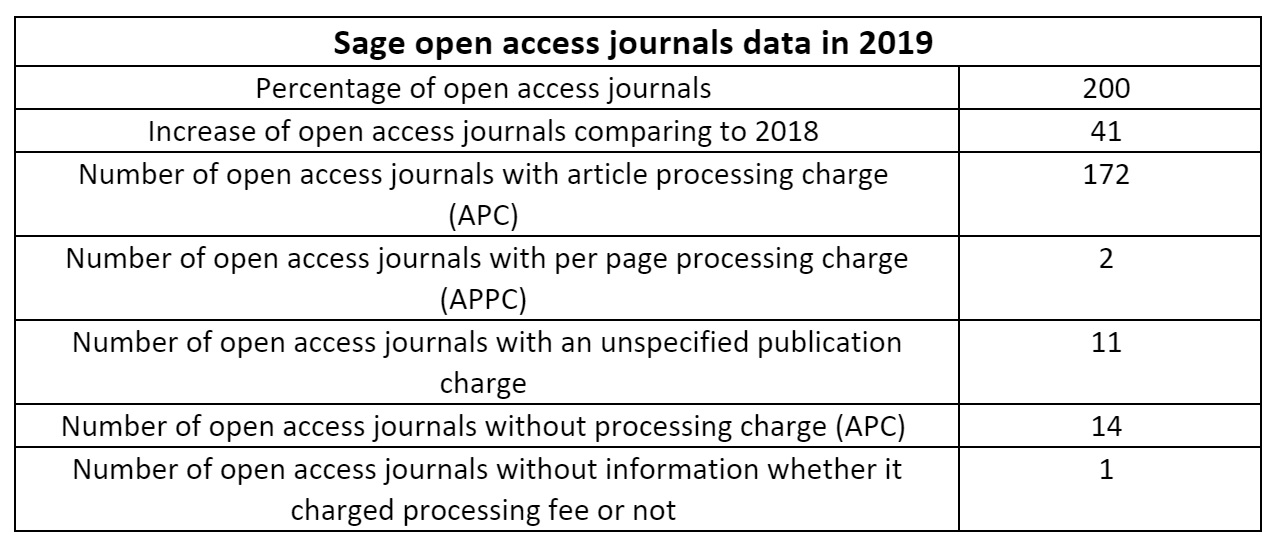
Sage currently publishes 1,200 journals. Of these, 200 journals (about 17%) are fully open access. Compared to the last year’s data, there is a net increase of 41 open access journals (26% increase) published by Sage. Out of all open access journals, 185 journals (92 percent) have publication fees, 14 journals have no publication charges and 1 journal lacks the information whether it has processing fee or not.

Some journals from the previous years ceased publication and Sage has removed them from their database, but only a few of them are accessible through clockss.org archive.

The information regarding the number of open access journals by Sage are summarized into the following table:

Out of the journals with processing charge, 172 journals charge ‘article processing fee’, 2 journals charge ‘per page processing fee’ and 11 articles lack the exact amount and way of processing fee.

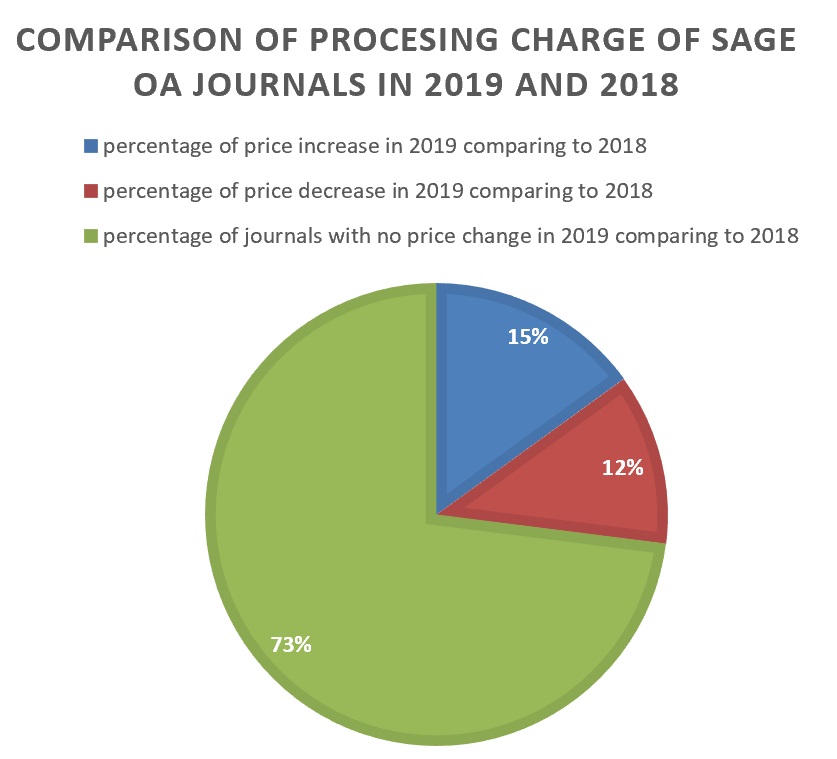
Pricing

The average actual price for article processing fee in 2019 is $1475 that indicates a slight decrease comparing to the average price of $1513 in 2018.

Compared to last year’s data, most journals have no change in article processing charge while 23 journals have an increase and 20 journals have a decrease in the amount of article processing charge. The average increase in price is about $587 and the average decrease in price is $449.

The following pie chart and table summarize the difference between processing fees in 2018 and 2019.

You could download the raw data for Sage 2019 open access journals here:

For more information about the previous years data for Sage publications, see the following links:

Ceased and transferred publications and archiving: best practices and room for improvement

SAGE Publications 2016 & 2017 Data Analysis (including Libertas Academica)

Cite as:

Pashaei, H., & Morrison, H. (2019). Sage in 2019: Growing in OA journals, still expensive, complex pricing trends. Sustaining the Knowledge Commons / Soutenir Les Savoirs Communs. Retrieved from https://sustainingknowledgecommons.org/2019/03/30/sage-in-2019-growing-in-oa-journals-still-expensive-complex-pricing-trends/